
Made for Everyday Confidence

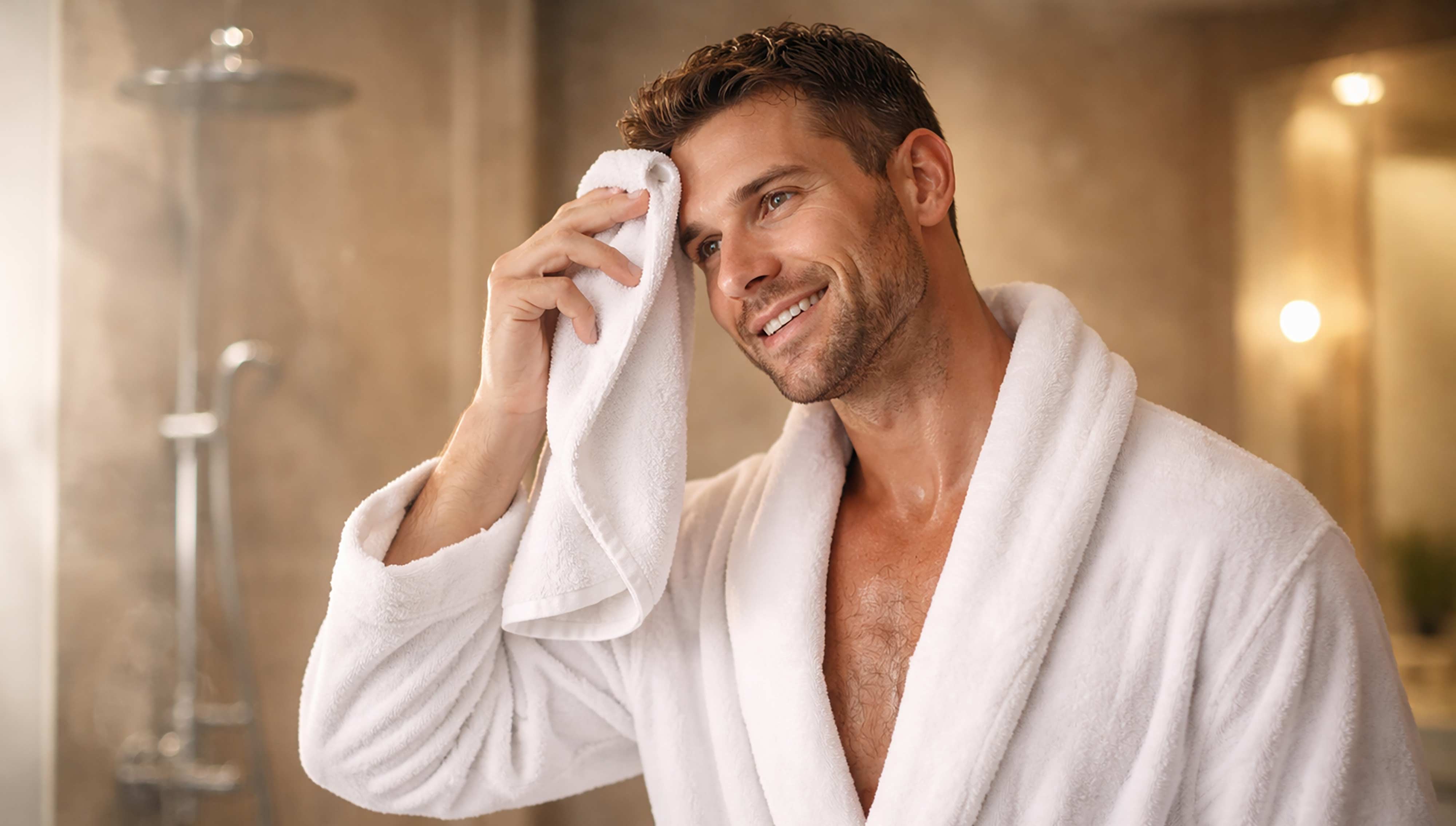
You step out of the shower feeling clean and refreshed… and then you start sweating. It can feel frustrating, especially if you just finished drying off.
Have you ever wondered, “Why do I sweat after a shower?” The answer is usually simple: your body is still cooling itself down. In most cases, sweating after a shower is completely normal and temporary. But sometimes, other factors can contribute.
Keep reading to learn more.

Yes. In many cases, sweating after a shower is how your body regulates its temperature.
When you take a hot shower, your core temperature rises. Hot water increases blood flow to the skin and raises your internal temperature. Once you step out, your body still needs to cool down. One way it does that is by producing sweat.
If your bathroom is warm and humid from steam, that cooling process can take even longer. Sweat evaporates more slowly in humid air. So you may notice that you still sweat even after toweling off.
This is especially common after a hot shower.
1. Your Core Temperature Is Still Elevated
Even after you turn off the water, your internal temperature doesn’t drop instantly. Your body works to return to its normal baseline, which likely involves sweating.
The hotter the shower, the more noticeable this can be.
2. The Bathroom Is Warm or Humid
Steam traps heat in the air. If your bathroom lacks ventilation, your skin cannot cool efficiently. This means you may experience sweating after showering because the room is still warm or humid.
Turning on an exhaust fan or opening a door can help speed up the cooling process.
Even after you turn off the water, your internal temperature doesn’t drop instantly.
3. You’re Getting Dressed Too Quickly
Putting on clothes immediately after drying off can trap heat. Most fabrics limit airflow, which may trigger sweating as your body tries to cool down.
Waiting a few minutes before dressing can make a difference.
4. Anxiety or Stress
Sweating isn’t always temperature-related. Emotional stress activates the sympathetic nervous system, which can trigger sweat production.
If you’ve ever felt sweaty before an event or during a rushed morning, stress or anxiety may be the cause.
5. Caffeine or Stimulants
Caffeine increases your heart rate and stimulates the nervous system. If you’ve had coffee before showering, that may contribute to sweating afterwards.
Certain medications can have a similar effect.
6. Hormonal Changes
Hormones influence body temperature regulation. Thyroid conditions, menopause, and other hormonal shifts can increase sensitivity to heat.
In these cases, sweating after a shower may feel more intense or prolonged.
7. Diaphoresis (Excessive Sweating)
If sweating feels excessive or unrelated to heat, it may have another cause.
The medical term for this type of heavy sweating is diaphoresis, and it’s a good idea to talk with a healthcare professional if it continues.
You may sweat when it’s cold after stepping out of a hot shower.
This happens because sweating is driven by internal temperature, not just room temperature. A hot shower still raises your core temperature, even if the air outside the bathroom is cold.
You may also sweat when it’s cold due to anxiety, caffeine, or hormonal factors. Environmental temperature doesn’t always override internal signals.

If post-shower sweating bothers you, small adjustments can help.
Lower the Water Temperature
Try switching from hot to warm or lukewarm water. A cooler shower reduces the spike in body temperature and shortens the cooling phase afterward.
Cool Down Gradually
Before turning off the shower, adjust the water temperature to cool. Even 30 seconds in cooler water can lower skin temperature.
Improve Ventilation
Turn on a bathroom fan or crack the door open to release steam. Reducing humidity allows sweat to evaporate more quickly.
Pat Dry Instead of Rubbing
Aggressive towel drying can stimulate blood flow and increase warmth. Gently patting dry is more effective in helping your body cool.
Wait Before Getting Dressed
Give your body 5 to 10 minutes to cool naturally. Air-drying for a short period can prevent trapped heat.
Choose Breathable Clothing
After waiting to get dressed, choose lightweight fabrics that allow airflow. This can help your body regulate temperature during the cooling phase.
Occasional sweating after a shower is common. However, you may want to speak with a healthcare professional if you experience:
These symptoms can sometimes be associated with underlying medical conditions.
Sweating after a shower is your body’s way of cooling down. In most cases, this sweating is temporary and harmless.
But if sweating feels excessive or unusual, consult a healthcare professional.
Why do I sweat immediately after drying off?
Your core temperature may still be elevated from hot water. Drying off removes surface moisture, but your body may continue sweating until it fully cools.
Why do I sweat after a shower at night?
Warm showers before bed can temporarily raise body temperature. If your bedroom is warm, your body may take longer to cool down.
Can anxiety cause sweating after a shower?
Yes. Stress activates the nervous system, which can trigger sweat production regardless of temperature.

Also in Blogs

If you’ve noticed more sweating after smoking, you’re not imagining it. Smoking can make you sweat more for some people. Nicotine affects your nervous system, body temperature, and sweat glands, al...
Wondering why your sweat smells like onions? It’s not your imagination. That sharp, onion-like smell can show up even when you’re clean, and it usually comes down to a mix of sweat, bacteria, and w...

Hot weather can make anyone sweat, but sweating in high humidity often feels much worse. Often, on humid days, your skin stays damp, your clothes cling to your body, and you feel hotter than the te...

© Ejis. all rights reserved.
